
How to Store Coffee Beans for a Better Daily Cup
A practical guide to storing your coffee, planning the right bag size and making freshness part of your everyday brewing routine.
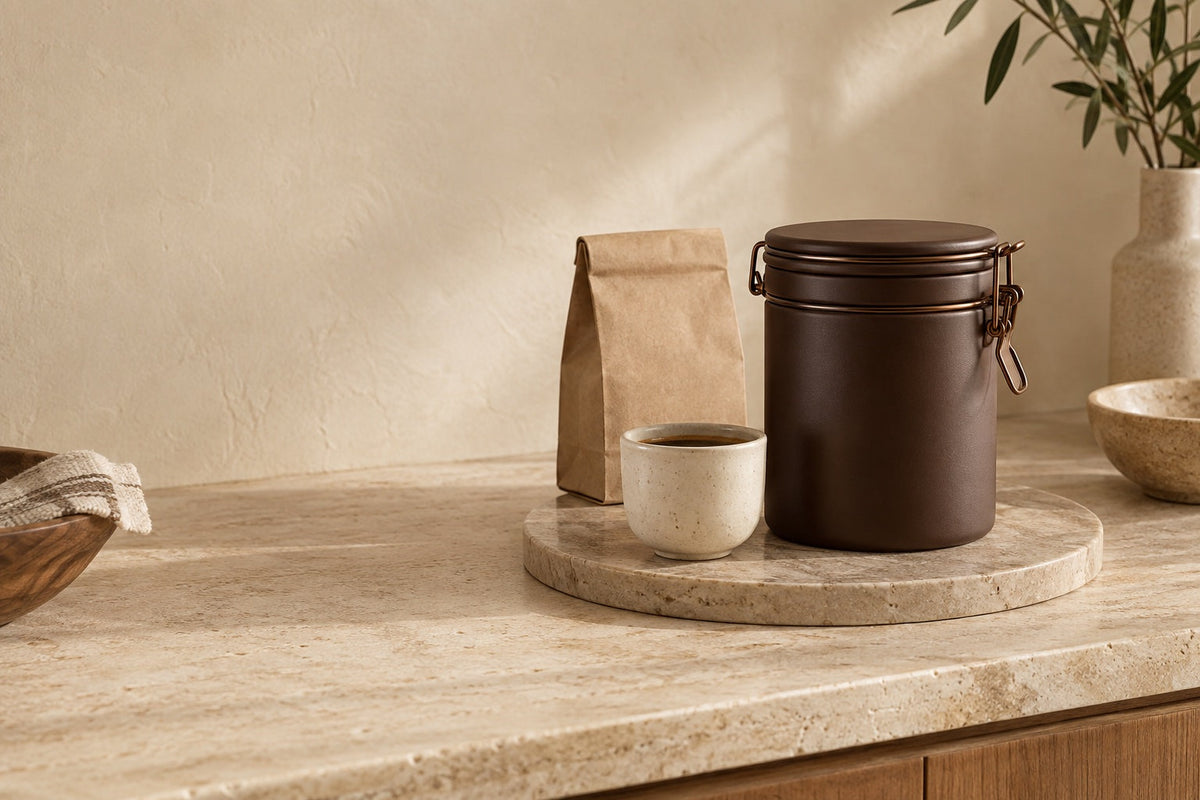
Your daily cup starts before the kettle goes on. A simple storage routine helps you enjoy the coffee you chose, whether you brew a morning espresso at home or keep a bag beside the office grinder.
Give your coffee a better home
Protect roasted coffee from air, moisture, heat and light. Keep it in a tightly sealed, opaque container in a cool, dry cupboard. A sunny shelf, a cabinet beside an oven or a spot near dishwasher steam is a poor choice.
For a Dubai kitchen, choose an indoor cupboard with a steady temperature rather than a balcony or a window ledge. Close the container as soon as you have measured your coffee. If you use a reusable canister, make sure it is completely dry before refilling it.
Buy for the way you brew
Start with your routine, not the biggest bag. As a planning example, one 18 g brew each day uses 252 g in two weeks. Two of those brews a day use 504 g. This is a shopping calculation, not a fixed recipe or a guarantee of freshness.
Choose the bag size that fits your household, then note when you open it. If several people share the coffee, that small note makes it easier to plan the next order. Explore our espresso coffees or filter coffees to build your own daily ritual.

Grind when you are ready
Keep whole beans intact until brewing and grind only your next dose. If you buy ground coffee, pay particular attention to sealing it between uses and choose a quantity you can finish promptly.
What about the freezer?
Freezing can be useful when you have more beans than you will use soon. Divide them into individual brewing portions and seal each portion in an airtight container or vacuum bag before freezing. Avoid repeatedly opening one large frozen bag: that exposes cold coffee to humid air. Use each portion once and avoid refreezing it. For a regularly replenished everyday bag, a suitable cupboard keeps the routine simpler.
Freshness is more than a date
There is no single freshness deadline for every coffee. Packaging, roast and storage all matter. Follow the date and directions on your pack. Fading aroma and a flatter cup can signal declining quality; visibly mouldy or damp coffee should be discarded.
Keep learning, one cup at a time
Try keeping a short brew note: the coffee, opening date, dose and what you enjoyed in the cup. Bring your questions to the Crack Coffee Academy, or contact our team for help choosing your next coffee.