
Natural vs Washed Coffee: How Processing Shapes Flavour
The process on a coffee label tells part of its story. Understand natural and washed coffees, and learn how to explore the differences in your cup.
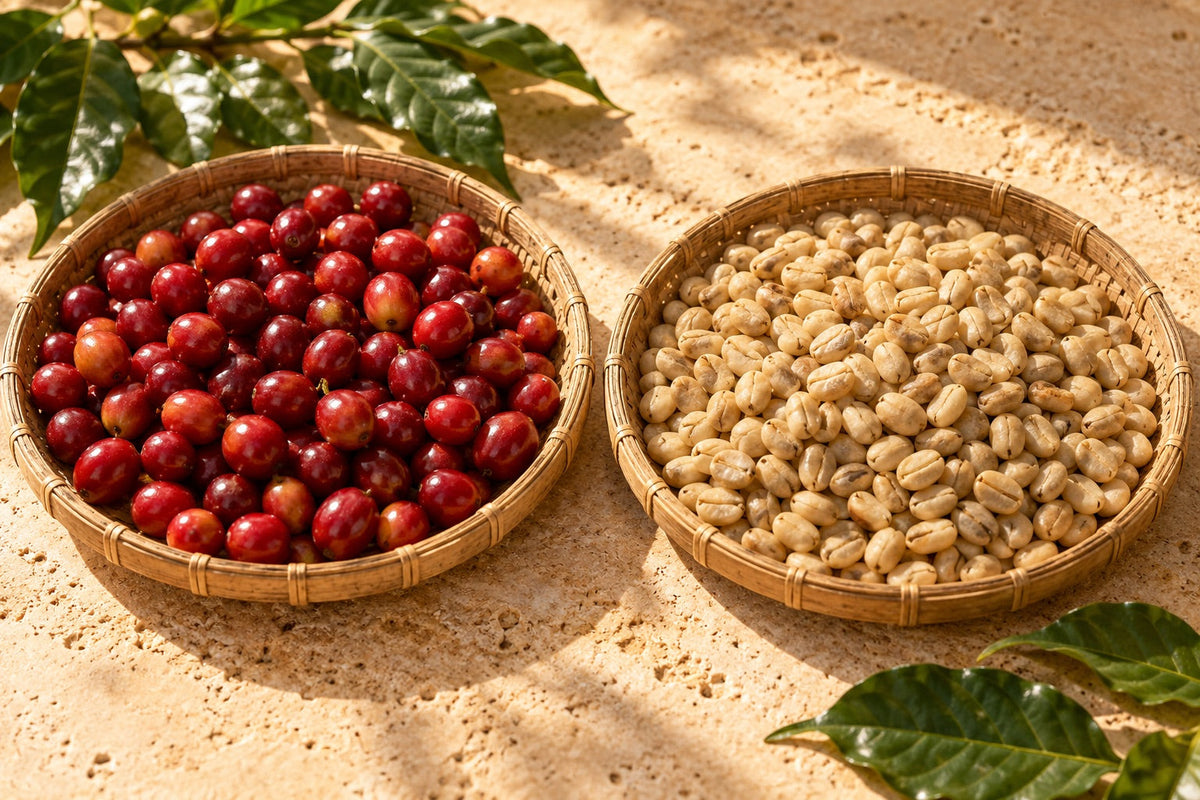
Natural and washed describe how coffee fruit is handled after harvest. In natural processing, coffee dries with the cherry around the seed. In washed processing, the fruit and remaining mucilage are removed before the coffee is dried. Both can produce excellent coffee; the process is one influence on flavour alongside variety, growing conditions, roasting and brewing.
For anyone shopping for specialty coffee beans in Dubai, understanding those words makes the label more useful. Browse our filter coffees or espresso coffees and compare the process with the tasting notes, rather than choosing by process alone.
What is natural coffee processing?
Natural processing is also called dry processing. The harvested cherry is dried with the seed inside before the dried layers are removed. Managing the drying conditions matters: a process name does not tell you how carefully a particular lot was handled.
Natural coffees are often associated with fruit-forward flavours and a fuller impression in the cup. Treat that as a possible direction, not a promise. A natural coffee can taste very different from another natural coffee because the raw material and processing choices differ.
What is washed coffee processing?
Washed processing removes the fruit before drying. The remaining sticky layer around the seed is removed through the producer’s chosen process, which can include fermentation and washing. Drying then prepares the coffee for the next stages before roasting.
Washed coffees are often described in terms of clarity and definition. That does not mean they cannot be sweet, fruity or full-bodied. Equally, a washed label does not guarantee that you will enjoy a coffee more than a natural one. The most useful evidence for your purchase is the specific lot’s description and how it tastes in your own recipe.
Compare the label, then compare the cup
- Natural: look for descriptions of fruit, sweetness, texture and finish, while keeping an open mind.
- Washed: look for the particular flavour notes and how the roaster describes clarity, acidity and body.
- Either process: check variety, origin, roast intention and brewing recommendation. These details work together.
The cover illustration shows whole coffee cherries beside parchment-covered seeds to explain fruit removal. It is an editorial illustration, not a photograph of a particular farm or lot.
Is anaerobic the same as natural?
No. Anaerobic refers to low-oxygen or oxygen-limited fermentation conditions, while natural describes drying coffee within the fruit. The terms can appear together because they describe different parts of a producer’s approach. A label saying “natural anaerobic” should not be read as a separate coffee species or a guaranteed flavour.
Fermentation is complex. Time, temperature, microorganisms and the coffee itself affect the result. The Specialty Coffee Association’s discussion of fermentation and coffee quality explores why the outcome cannot be reduced to one word on a bag.
Try a useful tasting comparison at home
- Choose two coffees with clearly stated processes. If possible, keep other details similar; otherwise, remember you are comparing complete coffees, not isolating processing scientifically.
- Use the same brewer, water, coffee dose and serving cups. Keep your recipe notes beside you.
- Taste as the drinks cool. Write ordinary descriptions such as “berry-like,” “cocoa,” “lighter texture” or “longer finish.”
- Repeat the comparison before deciding. One uneven brew can hide what you enjoy about a coffee.
If you want a stronger tasting vocabulary, explore our sensory and coffee education courses in Dubai. Guided comparison can help you explain preferences without needing to memorise a flavour wheel.
Frequently asked questions
Is natural coffee flavoured coffee?
Natural processing does not itself mean that flavouring has been added. Tasting notes describe perceived flavour. For any coffee described as infused or flavoured, read its specific product information separately.
Does washed mean the brewed coffee is cleaner or safer?
“Clean” in tasting language usually describes flavour clarity, not a health or hygiene certification. Do not use a process name to make safety or health assumptions.
Which process should I choose for espresso?
Either can work. Choose the coffee’s flavour profile and intended brewing use, then dial in your recipe. Our espresso and filter bean guide explains that decision.
Further reading: the National Coffee Association’s coffee processing overview. Want help choosing a bag? Ask the Crack team.