
Brewing Courses in Dubai: Build a Repeatable Filter Coffee Routine
Explore a practical brewing course in Dubai. Learn to record recipes, compare one variable at a time and choose training that fits your filter coffee goals.
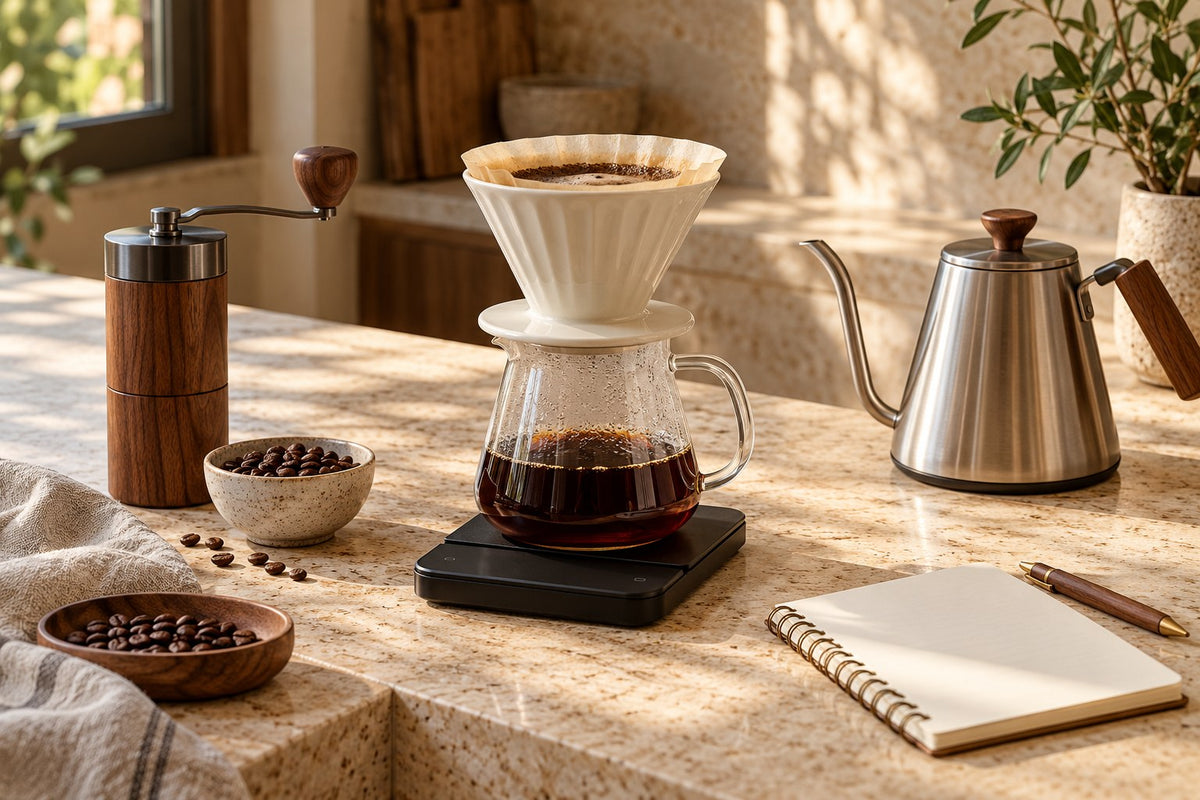
A brewing course is useful when you want to understand why a cup changes and how to repeat a result you enjoy. The aim is not to memorise one perfect recipe. It is to learn which observations to record, which variable to adjust and how to judge the next brew.
Crack’s Brewing Course in Dubai lists Foundation, Intermediate and Professional options. It focuses on brewing knowledge and practice, making it a different learning path from training primarily for espresso-bar service.
Arrive with a brewing question
Before class, write down your brewer, grinder and usual coffee. Add one sentence about the problem you want to solve: perhaps your results change from day to day, you struggle to describe the difference between recipes, or you cannot reproduce a cup you enjoyed.
Bring notes rather than relying on memory. Useful details include dry coffee weight, water weight, grinder setting, water temperature if measured, pouring sequence and total time. Ask whether you should bring equipment; do not assume a personal brewer is required.
Use a recipe as a reference
A written recipe gives you a starting point for comparison. For example, 15 g of coffee with 250 g of brewing water is approximately a 1:16.7 coffee-to-water ratio. This is an arithmetic illustration, not a tested Crack recipe or a target for every brewer.
Record the result in plain words. If a brew tastes different, first check whether you repeated the intended steps. Changing coffee, water, grind and pouring together makes the cause difficult to interpret. Our grind size guide explains where grinding fits into this process.
Try a one-variable learning exercise
- Choose one coffee from the filter collection and a preparation you can repeat.
- Make a baseline brew and record the recipe, time and taste.
- Choose one adjustment with your trainer, such as a small grind change.
- Keep the other intended inputs the same and prepare the next cup.
- Write down the difference and decide whether to keep, reverse or investigate the change.
The useful result is not simply “better.” It is a clearer account of what changed and why you prefer it. If the results are inconsistent, work on repeatability before adding more variables.
Choose a suitable course level
The Foundation listing introduces brewing devices and variables such as ratio, grind and temperature. Intermediate adds measurement and analysis of extraction. Professional explores more complex brewing and water questions. The current Professional listing names Brewing Intermediate as a prerequisite.
Ask how the selected level matches your experience and preferred method. A home brewer seeking a dependable morning routine may need a different starting point from someone responsible for a café’s filter menu.
Frequently asked questions
Is a brewing course the same as a barista course?
The focus differs. Compare the Brewing Course with Crack’s Barista Course if your main goal is espresso preparation, milk work or service behind a bar.
Do I need expensive equipment to learn?
Start with the equipment you use and explain its limitations to the trainer. Understanding your method comes before deciding whether an upgrade solves a specific problem.
What should I confirm before booking?
Contact Crack to confirm the level, dates, venue, language, hands-on format and certificate arrangements. For other learning goals, browse the full Coffee Academy.