
Coffee Grind Size Guide: Espresso, V60 and French Press
A better grind starts with your brewer. Use this practical guide to choose a starting point and make small, useful changes to your next cup.
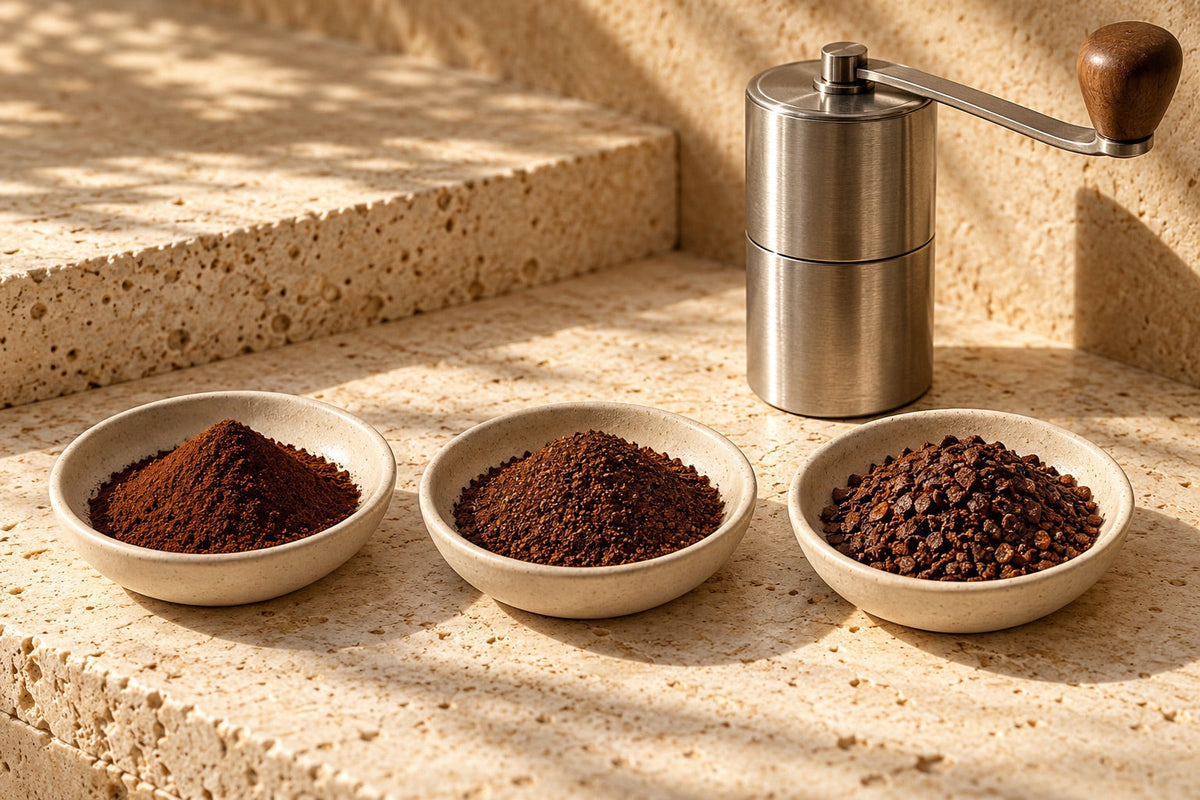
For a starting point, espresso generally needs a fine grind, V60-style pour-over a medium-fine grind, and French press a coarser grind. These are directions rather than universal settings: the right result depends on your grinder, coffee, dose and brewer. Adjust in small steps and judge the finished cup.
If you are choosing a grinder for your home in Dubai, look at the brewing methods you use before comparing machines. Explore Crack’s coffee grinders and pair your equipment choice with a recipe you can repeat.
Grind size by brewing method
- Espresso: fine. Water is pushed through a compact coffee bed under pressure. Small grind changes can noticeably affect flow.
- V60 and other pour-over brewers: medium-fine to medium. Filter shape, dose and pouring technique influence drainage, so start with the brewer’s guidance.
- French press: coarse as a starting point. This immersion method works differently from a paper-filter dripper. Grinding finer can change texture and the amount of sediment in your cup.
The image illustrates relative textures, not calibrated particle sizes. Words such as “fine” also mean different things on different grinders. A setting number from someone else’s grinder is not automatically transferable to yours.
Adjust espresso without losing your reference point
Choose a dose and beverage yield that suit your basket and coffee, then record them. If a shot runs much faster than your starting recipe and tastes thin or sharp, a finer grind may help. If it struggles to flow and tastes harsh, a slightly coarser setting may help. These are clues, not a diagnosis: uneven distribution, channeling and an unsuitable dose can also affect extraction.
Keep your preparation consistent while you change one variable. Our Work Blend is one option to explore for espresso; use its flavour description as a buying guide rather than a promise that every recipe will taste identical.
Dial in pour-over and French press
For pour-over, note your dose, water amount, grind and total brew time. A slow drawdown can involve fines, the filter, agitation or the coffee itself. Try a small grind adjustment while keeping the pour steady. For French press, keep the steeping routine consistent and pour gently to limit disturbance of settled grounds.
Taste coffee after it has cooled a little. Write down what you want to improve—more sweetness, less harshness or a different texture—before changing a setting. Explore coffee beans for filter brewing when you are ready to compare coffees using the same recipe.
Choosing a grinder for home use
Check whether the model is intended for espresso, filter or several methods. Consider adjustment control, daily cleaning, counter space and whether you change coffees often. Our home coffee equipment guide explains how to shortlist a machine and grinder together.
Frequently asked questions
Can one grinder make espresso and filter coffee?
Some models are designed for multiple methods; others focus on espresso. Confirm the particular model’s adjustment range and workflow rather than assuming all grinders do both equally well.
Should I grind coffee in advance?
For a repeatable routine, grind what you need close to brewing. Keep the remaining beans protected from heat, moisture and sunlight. Read our coffee storage guide for practical habits.
Where can I practise in Dubai?
Explore Crack Coffee Academy or ask our team which course fits your equipment and experience.