
Fermented and Flavoured Coffee Beans: Explore Crack’s Filter Collection
Explore Crack’s co-fermented filter coffees, from coconut and lychee to peach and rose. Learn how fermentation, flavour notes and added flavouring differ.
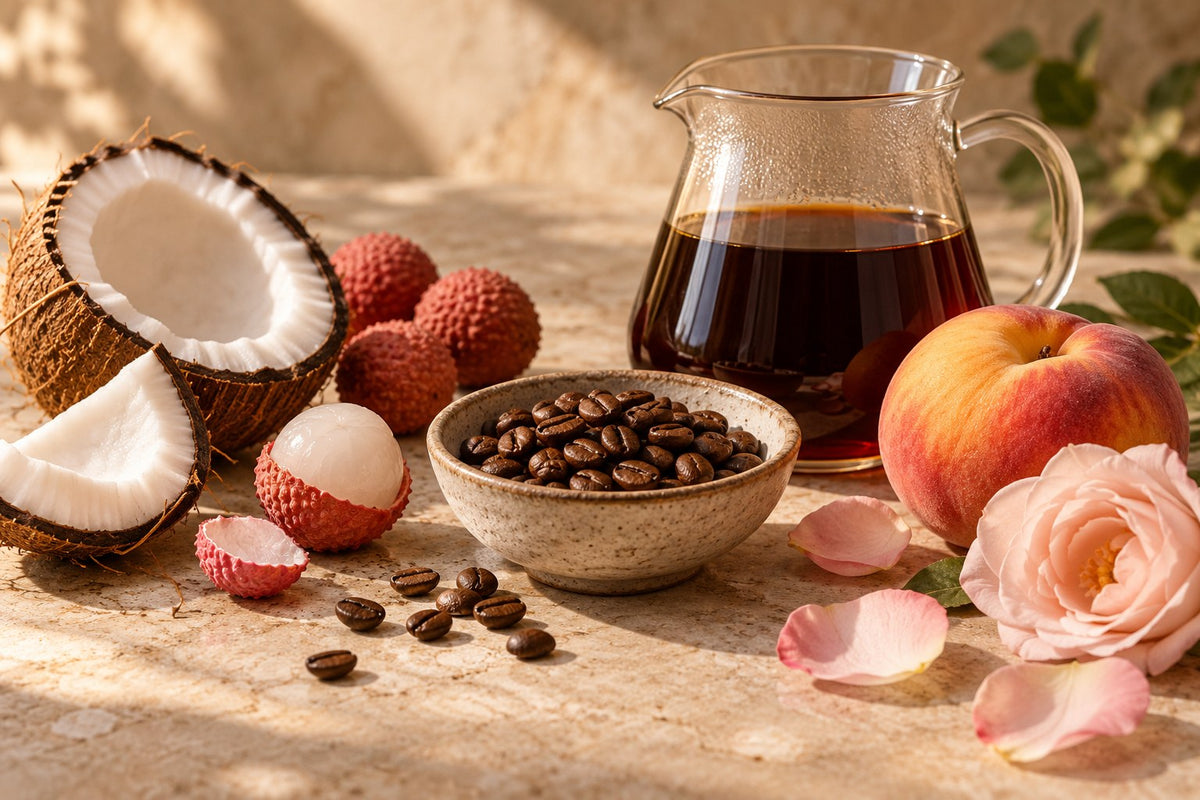
Fermented coffee, co-fermented coffee and flavoured coffee are related terms, but they do not describe one identical process. A fruit or floral tasting note describes the cup; it does not, by itself, establish that an ingredient was added. To understand a particular coffee, read its processing description as well as its flavour notes.
Crack’s filter coffee collection in Dubai includes Colombian coffees labelled Coconut, Lychee, Peach, Rose and Tobacco Co-Fermented, alongside Uganda Natural Anaerobic. They offer different starting points for exploring expressive coffee profiles.
Fermentation, co-fermentation and flavouring: what differs?
Fermentation involves microorganisms acting on material during coffee processing and can influence the resulting flavour. It is part of many processing approaches, rather than a category limited to unusually fruity coffees.
Co-fermentation commonly describes processing in which additional materials are introduced during fermentation. Infusion and flavouring describe other ways flavour may be introduced, with the timing and method varying between producers. The terminology is not used identically everywhere, so a product name is not a complete processing specification.
Flavouring can also occur later, including after roasting. That is different from a tasting note that simply describes a resemblance to coconut, peach or chocolate. For Crack’s products, use the individual listing and ask the team about any processing detail you want confirmed.
Explore the co-fermented coffees at Crack
- Coconut Co-Fermented Colombia: the listing describes Purple Caturra, washed coconut co-fermentation, and notes including coconut cream and sweet candy, with a silky mouthfeel.
- Lychee Co-Fermented Colombia: listed as Caturra with washed lychee co-fermentation. Its notes include lychee, rambutan, jasmine and tropical fruit.
- Peach Co-Fermented Colombia: listed as Caturra with washed peach co-fermentation, with white peach, apricot and honey notes.
- Rose Co-Fermented Colombia: the product title identifies it as co-fermented; the description lists Geisha, washed processing, and notes including jasmine, rose and white grape.
- Tobacco Co-Fermented Colombian: the title identifies it as co-fermented; its description lists Caturra, washed processing, and sweet tobacco, vanilla and warm-spice notes.
These are the descriptions supplied by the current listings, not a promise that every drinker will perceive the same flavours. The Rose and Tobacco descriptions do not explain the full fermentation method. Ask Crack for those details rather than inferring an ingredient list from the product names.
Is anaerobic coffee the same as co-fermented coffee?
No. Anaerobic refers to processing conditions with restricted oxygen; it does not by itself tell you whether another ingredient was introduced. Crack’s Uganda Natural Anaerobic lists a natural anaerobic process, with red grape, dark chocolate, pineapple and fresh almond notes. Those notes alone are not evidence of added fruit or chocolate.
For the broader processing vocabulary, read our natural versus washed coffee guide.
Compare two coffees with a simple filter routine
Choose two listed profiles that interest you. Use the same brewer, water and serving size, and record your recipe. Taste black first if you want to compare the coffee itself, then try your preferred drink format.
Describe aroma, sweetness, texture and finish before checking the tasting notes again. Adjust preparation to suit each coffee rather than treating one grind setting as universal. Our grind size guide can help with that starting point.
Frequently asked questions
Does “flavoured” always mean artificial flavouring?
No. The word alone does not explain the ingredient or method. Check the product information and ask how the flavour profile was developed.
Does a tobacco tasting note confirm tobacco or nicotine content?
A sensory descriptor cannot establish composition. The product page does not provide a full ingredient specification; ask Crack to clarify the specific product.
Where can I practise comparing these coffees?
Explore Crack’s Sensory Skills Course for structured tasting learning, and check the current filter collection for available coffees.